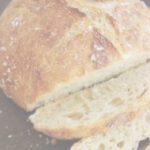
Rustic Artisan Bread
Makes four 1 pound loaves. This recipe is easily halve or doubled.
3 cups lukewarm water
1 ½ tbsp granulated yeast (2 pkgs)
1 ½ tbsp kosher or other coarse salt
6 ½ cups unsifted, unbleached, all-purpose white flour, measured with the “scoop and sweep method, 1 cup at a time.
Cornmeal for pizza peel or baking stone
**optional: herbs of your choice – all or combination of, thyme, oregano, basil, rosemary (go easy on this one if you’re not used to cooking with it), or other favourites you might have
Mixing and storing the dough:
Use a 5 or 6 quart bowl or food grade lidded container (not airtight).
Warm the water to lukewarm, about 100 F.
Add the yeast and salt to the water, don’t worry about it all dissolving right away.
Mix in the flour, by scooping it from the flour bucket, then level (sweep off) with a knife or spatula. Don’t let the flour compress when you’re scooping it or it will throw off the measurements.
Mix with a wooden spoon, or a heavy duty stand mixer with a dough hook until the mixture is uniform. If you’re using a wooden spoon and it gets too hard to mix the flour in, wet your hands and reach in.
The mixing is done when there are no dry patches. Cover with a loose lid. Don’t use any form of screw top because that could trap the gas that happens when the dough is rising and those gases need to be able to escape.
Allow the dough to rise at room temperature until it begins to collapse, or flattens on the top, approximately 2 hours, depending on the room’s temperature and the starting temperature of the water. If it takes longer it will not harm the dough.
The dough is now ready to use, but is easier to work with (less sticky) when it’s been refrigerated at least 3 hours, before trying to shape your loaf.
To bake:
The gluten cloak: don’t knead, just cloak and shape.
From your dough container grab a grapefruit sized piece and pull up, and cut it off. Add a little more flour to what is in your hands and form it into a circle by gently stretching the surface of the dough around to the other side, on all four sides rotating as you go. You’ll end up with a collection of bunched ends on the bottom, but it will flatten out somewhat during resting and baking.
Rest and let rise again on your cornmeal-covered pizza peel, for about 40 minutes. It might not rise much here, most of that will occur during baking.
20 minutes before baking, preheat the oven to 450 F, with a baking stone place on the middle rack. Place an empty broiler tray for holding water on any other shelf that won’t interfere with the rising bread.
Dust and slash:
Dust the top of the loaf liberally with flour, which will allow the slashing knife to pass through without sticking. Slash a ¼ inch deep lines in the top of the loaf using a serrated knife.
Baking with steam:
After the 20 min preheat, slide the dough off the pizza peel and onto the preheated baking stone. Quickly and carefully, pour about a cup of hot water from the tap into the broiler tray and close the door to trap the steam.
Bake for about 30 minutes, or until the crust is nicely browned.
Allow to cool completely on a wire rack before cutting, it will develop a proper crumb this way
——
The rest of the dough gets stored in your refrigerator in its lidded container (not airtight) and must be used in the next 10 days.
When your container of dough is used up, you can immediately mix more dough again in the same container. Just scrape down the sides and it will hydrate and incorporate into the new dough mix. When you do this, with a few more batches, you’ll work up to a sourdough flavour